From $1 trillion spending to F-35s, U.S.-Saudi pledges aren’t done deals yet
U.S. President Donald Trump trumpeted Saudi Arabia’s $1 trillion investment pledge in the States and the potential sale of American fighter jets to Riyadh, but experts say there are lingering doubts over whether such deals will materialize.
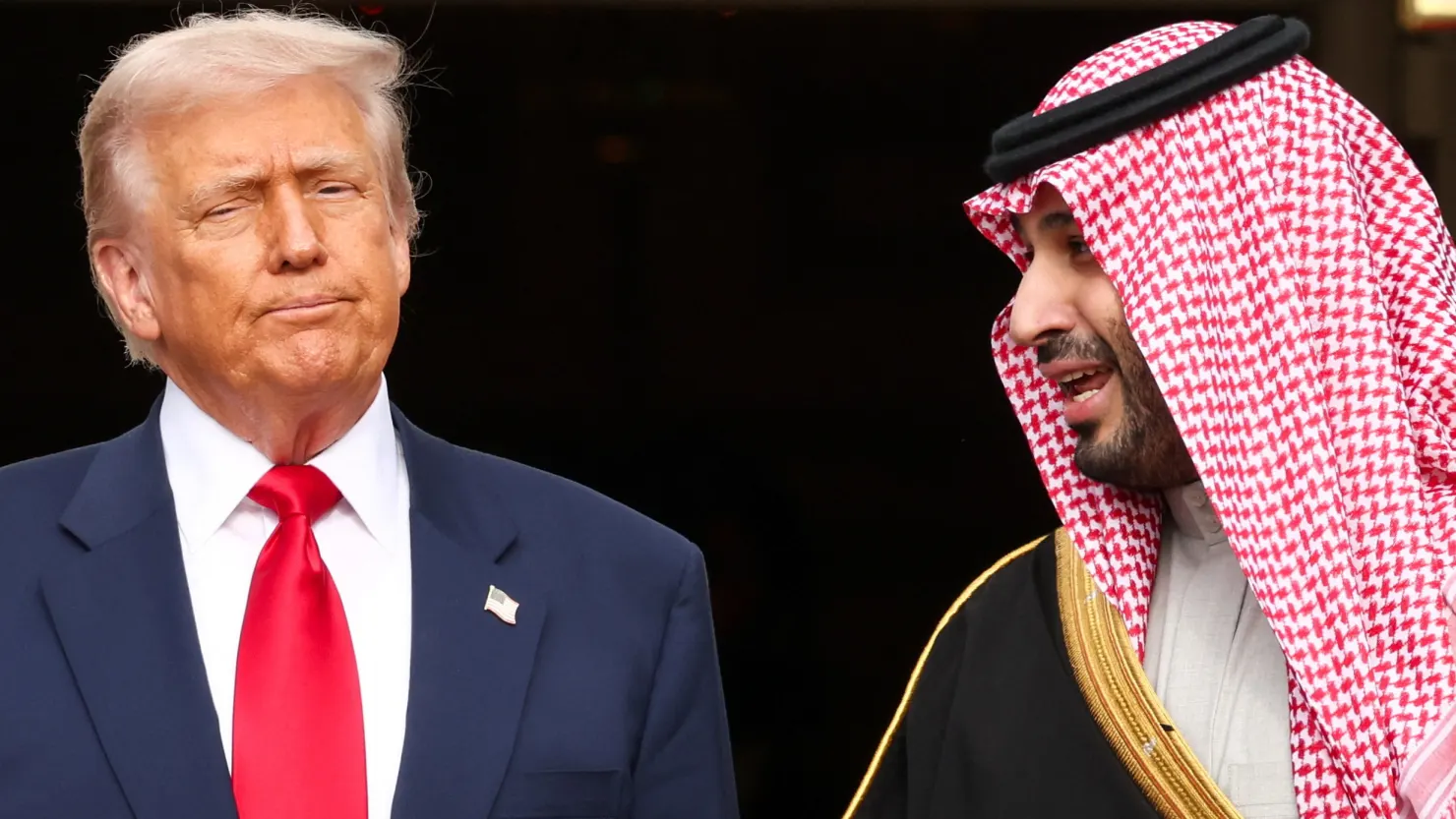
Trump rolled out the red carpet for Saudi’s de facto ruler Crown Prince Mohammed bin Salman as he arrived in Washington on Tuesday for talks ranging from security to civil nuclear energy partnerships. The leaders signed a defense cooperation pact and held discussions about the potential sale of American F-35 fighter jets to the kingdom.
The U.S. visit by Mohammed bin Salman (or MBS, as he’s widely known) was not without controversy as it was the first time he had visited the States since the killing of Saudi critic and journalist Jamal Khashoggi in 2018.
U.S. intelligence determined that the crown prince had approved the operation that led to Khashoggi’s death in a Saudi consulate in Istanbul, but Riyadh denied any involvement in the murder.
Undeterred by global outrage over the death of Khashoggi, and question marks over Saudi Arabia’s rehabilitation and invitation to the White House, Trump and MBS said they had “finalized a series of landmark agreements that deepen the U.S.-Saudi strategic partnership.”
Among them, the White House said in a statement , was Saudi’s pledge to increase the $600 billion worth of investments in the U.S. that it made in May, to $1 trillion. The White House said the bump reflected “deepening trust and momentum for the United States under President Trump’s leadership.”
No further detail was given as to a time-scale around that trillion-dollar investment, however.
A $1 trillion investment is equal to Saudi Arabia’s annual economic output in 2023 (of $1.07 trillion) and economists questioned whether that level of investment would, or could, materialize any time soon.
“These sort of pledges have become regular features of the international landscape, even when, as in the case of the EU [and it’s pledged investment in the U.S. as part of a trade deal] there’s absolutely no enforcement mechanism available,” Paul Donovan, chief economist at GBS Global Wealth Management, noted Wednesday.
“To put the Saudi pledge in context, that is the equivalent of almost an entire year’s GDP [gross domestic product] for the kingdom. The pledge may not therefore be honored in the near term,” he cautioned.
In addition to the investment pledges, Trump and MBS discussed the sale of F-35 fighter jets to Saudi Arabia, with the kingdom reportedly looking to buy as many as 48 of the stealth fighter jets in what would be a multibillion-dollar deal.
The president “approved a major defense sale package, including future F-35 deliveries, which strengthens the U.S. defense industrial base and ensures Saudi Arabia continues to buy American,” the White House said. But no details were given on the number of planes sold, or any timeframe for their supply.
Such a sale could prove controversial with U.S. lawmakers whose sympathies and allegiance has traditionally leant toward Israel, the U.S.′ main and longstanding ally in the Middle East.
Israel is currently the only country in the Middle East to have F-35s and any sale of such advanced stealth technology to Saudi Arabia could be seen as risky, having the potential to shift military and power dynamics in the fractious region. For its part, the IDF is reportedly unhappy at the prospect of F-35 deal with Saudi Arabia, warning that Israel’s air superiority in the region would be jeapardized.
Trump shrugged off those concerns, telling reporters in the Oval Office on Tuesday that: “We’ll be selling F-35s,” although he alluded to Israel’s discontent, noting: “This [Saudi Arabia] is a great ally, and Israel is a great ally.”
“I know they’d like you to get planes of reduced calibre, but as far as I’m concerned, I think they are both at a level where they should get top of the line,” he added.
“Saudi Arabia is an important U.S. security partner, and increasing bilateral defense cooperation can further common interests and support efforts to build a regional security architecture that more effectively deters and defeats aggression,” Bradley Bowman, a senior director at the Foundation for Defense of Democracies, said in analysis.
“However, before providing Riyadh with the F-35, Washington should address concerns related to Riyadh’s relationship with China, follow the law regarding Israel’s Qualitative Military Edge, and demand that Saudi Arabia first normalize relations with Israel.”